Tokyo Train Types ExplainedRapid, Express and Limited ExpressWhich Ones Cost Extra
This article contains affiliate links
This is Part 4 of our guide to paid seats on Tokyo trains. In Part 1 we warned that a “Limited Express” in Tokyo can be free. This time we look at every train type, JR and private railways together, and how to tell which ones need an extra ticket.
Local, Rapid, Express, Limited Express…
Stand on almost any Tokyo platform and different kinds of trains pull in one after another, all on the same track. Which one is fastest? Will this one charge me extra? Even people who live in Tokyo have to stop and think.
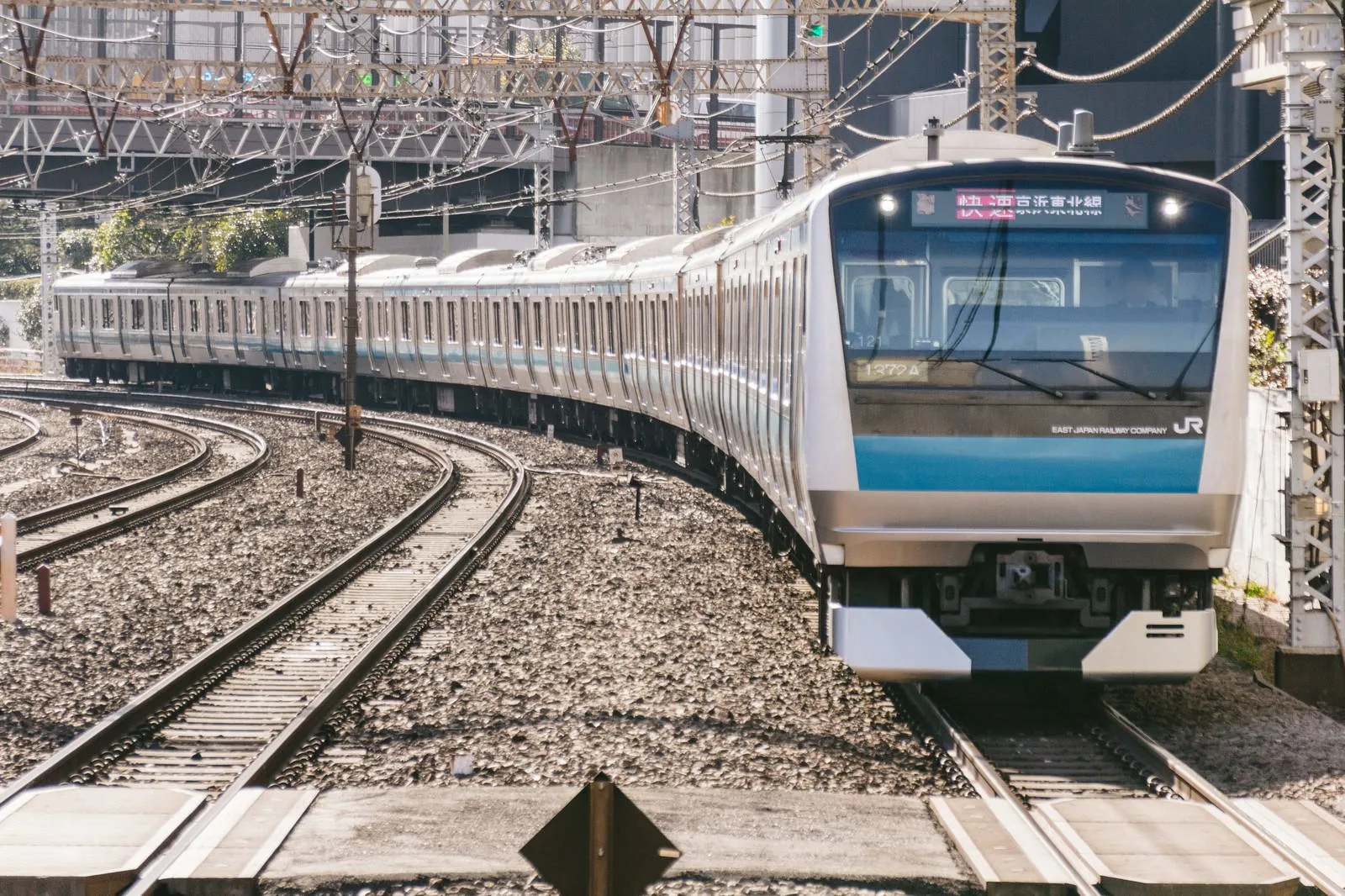
A Rapid train on JR's Keihin-Tohoku Line. JR Rapid trains need only the normal fare. Photo: PAKUTASO
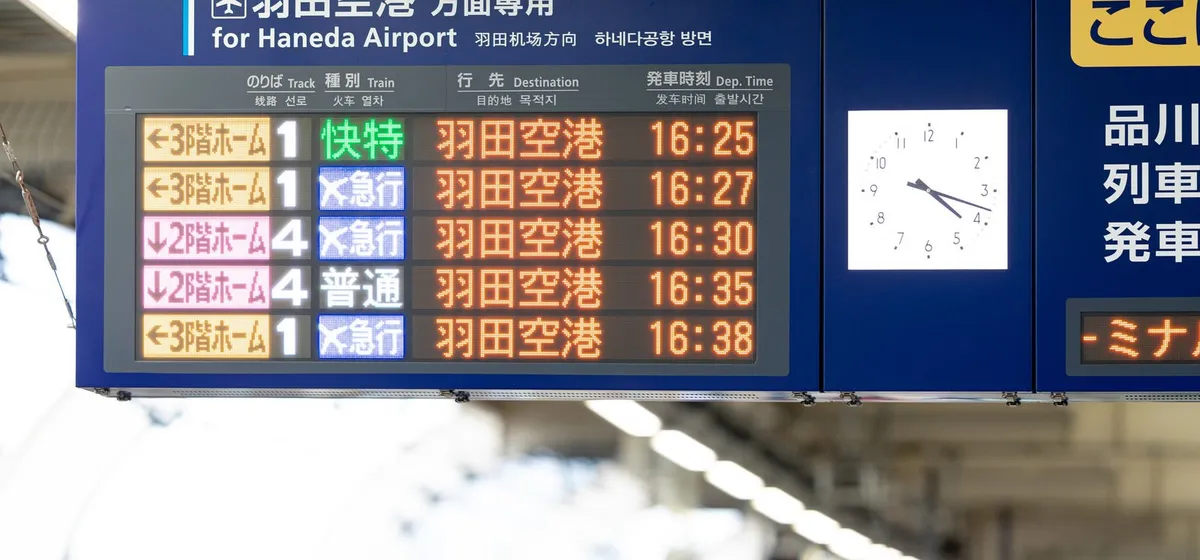
Here are the four words you will see most, with the Japanese you will find on the signs.
Swipe the table sideways to see more →
| On the sign | In English | What it means |
|---|---|---|
| 各駅停車 / 普通 | Local | Stops at every station |
| 快速 | Rapid | Skips some stations |
| 急行 | Express | Skips more stations |
| 特急 | Limited Express | The fewest stops. Sometimes free, sometimes not |
A quick quiz
The Keio Line’s “Limited Express” and the Seibu Line’s “Limited Express Laview”. Which one needs an extra ticket?
The answer is the Laview. The Keio Limited Express needs only your normal fare.
Whether you pay extra depends on the railway company, not the name of the train. On JR, a Limited Express needs a limited express ticket and a Rapid needs only the fare. On private railways, the Limited Expresses of Keio, Keikyu, Tokyu and Keisei are free to ride with your fare, and those of Odakyu, Seibu and Tobu need a ticket.
On JR, Rapid trains are free and Limited Expresses are not
JR’s rules split trains into “express trains” and “ordinary trains”. Express trains are the Limited Express and the (ordinary) Express. Everything else is an ordinary train (JR East, passenger regulations, general rules (Japanese)). To ride an express train you need a limited express or express ticket on top of the fare (JR East, passenger regulations (Japanese)).
Rapid is an ordinary train
So a Rapid counts as an ordinary train, and you ride it with the fare alone. The double-decker Green Cars around Tokyo are attached to these local and rapid trains (JR East, Green Cars on local trains (Japanese)). Fares and how to buy a Green Car ticket are in Part 2.
JR Limited Expresses around Tokyo have no unreserved tickets
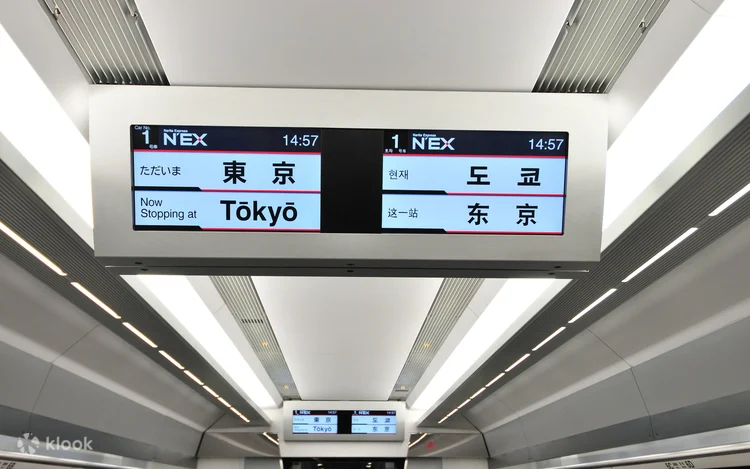
The JR East Limited Expresses that run around Tokyo are the Odoriko, Shonan, Azusa, Kaiji, Fuji Excursion, Akagi, Hitachi, Tokiwa, Narita Express, Shiosai, Wakashio and Sazanami. You ride them with a reserved-seat ticket or a seat-undesignated ticket, and there is no non-reserved limited express ticket for them (JR East, limited expresses from Tokyo (Japanese)).
If you would like to sort out your JR tickets before you land, Japan Experience sells shinkansen and train tickets online in English.
\ Book in English /
↓ Train tickets on Japan Experience ↓
On private railways, each company has its own rules
Private railways use the same word “Limited Express”, but which trains cost extra is up to each company. These are the trains that need an extra ticket, checked on each company’s official pages.
Swipe the table sideways to see more →
| Company | Trains that need an extra ticket | Free with the fare (as far as the official pages say) |
|---|---|---|
| Keio | Keio Liner, Mt.TAKAO | Limited Express and the other express types |
| Keikyu | Morning Wing, Evening Wing, and car 2 of Kaitoku trains on weekends and holidays (Wing Seat) | Kaitoku and Limited Express, except the reserved trains and cars |
| Tokyu | Q SEAT (some cars of weekday evening Express trains on the Toyoko and Oimachi lines), S-TRAIN | Limited Express and others, except the reserved trains and cars |
| Keisei | Skyliner, Morning Liner, Evening Liner | Rapid Limited Express, Limited Express, Access Express |
| Odakyu | Romancecar limited expresses | Everything other than the Romancecar |
| Seibu | Limited Express Laview, Red Arrow, S-TRAIN, Haijima Liner | We could not find an official list |
| Tobu | Limited expresses (Spacia X and others), TJ Liner, TH Liner, SL and DL trains | Everything else |
The links in the table go to each company's Japanese pages.
Two trains to Narita, one free and one not
On the Keisei Line, the Access Express to Narita Airport needs no limited express charge, while the Skyliner does (Keisei, Narita Airport access guide (Japanese)). Both go to the airport, which makes this the easiest place in Tokyo to get it wrong. If you want the fast one with a reserved seat and room for your suitcase, buy a Skyliner ticket before you board.
Some trains have one paid car
Watch out for trains where only one car costs extra. On Keikyu, car 2 of Kaitoku trains on weekends and holidays is the Wing Seat car. On Tokyu, one car of some weekday evening Express trains is a Q SEAT car. To sit in that car you need a seat reservation ticket, even though the rest of the train is free.
If you board without the extra ticket
If you ride a paid train or car without a ticket, you pay on board, and it usually costs more than buying ahead.
- Odakyu Romancecar: the limited express charge plus ¥350
- Seibu Laview: plus ¥200
- Keikyu Wing: plus ¥200
- Skyliner: plus ¥300 for an adult without a Skyliner ticket
- Keio Liner: from October 2026, ¥1,000 per person on board
Tokyu's Q SEAT costs the same ¥500 on board (Tokyu, Toyoko Line Q SEAT (Japanese)).
If you are not sure, ask the station staff before you board whether the train needs an extra ticket. That is the surest way.
Subway trains that keep going onto other lines
Tokyo Metro runs through onto other companies’ tracks on seven of its nine lines. Toei Subway has four lines, the Asakusa, Mita, Shinjuku and Oedo lines.
So a train you board at a subway station may carry on into the suburbs on a private railway’s tracks. Before you get on, check the destination and the train type on the display. Stops for each type are on each company’s route maps (for example Seibu, stations and route map (Japanese)), and a route app will tell you which train to take.

Look up at the display as the train comes in, not only at the platform number. The same platform can send you to two very different places.
Which train suits you?
If you want to get there faster without paying extra, take a JR Rapid or a Limited Express on Keio, Keikyu, Tokyu or Keisei.
If you would rather sit back, take a paid limited express or a liner. How to choose a paid seat is in Part 1, and how to book private-railway limited expresses and liners, company by company, is in Part 7.
\ Living in Japan? /
↓ JR tickets, delivered to your door ↓

Japanese-language ad for NAVITIME Travel. Tickets are delivered to an address in Japan.
Practical information
- Checked on October 19, 2026
- JR Limited Express and Express are “express trains” and need a limited express or express ticket on top of the fare. Rapid is an “ordinary train” and needs only the fare
- Private-railway trains that need an extra ticket Keio Liner and Mt.TAKAO (Keio), Wing trains and the Wing Seat (Keikyu), Q SEAT and S-TRAIN (Tokyu), Skyliner, Morning Liner and Evening Liner (Keisei), Romancecar (Odakyu), Laview, Red Arrow, S-TRAIN and Haijima Liner (Seibu), limited expresses, TJ Liner, TH Liner and SL and DL trains (Tobu)
- Official pages JR East, passenger regulations, general rules, JR East, passenger regulations, JR East, Green Cars on local trains, JR East, limited expresses from Tokyo, Keio, FAQ, Keio, Keio Liner standing tickets, Keikyu, Wing seat reservation service, Keikyu, passenger regulations, Tokyu, Q SEAT, Tokyu, Toyoko Line Q SEAT, Keisei, Narita Airport access guide, Keisei, how to ride, Odakyu, buying a Romancecar ticket, Seibu, limited expresses, S-TRAIN and Haijima Liner, Seibu, Limited Express Laview, Seibu, stations and route map, Tobu, revision of passenger regulations, Tokyo Metro, integrated report 2026, Toei Subway (all in Japanese)
- Photos The departure board at the top and the Keihin-Tohoku Line train are free stock photos from PAKUTASO.
Note: Train types and timetables change with each timetable revision. Please check each company’s official information before you travel.
Affiliate note: This article contains affiliate links to Japan Experience, Klook and NAVITIME Travel. If you book through them, we may earn a commission at no extra cost to you.