JR Green Cars on Tokyo Local TrainsFares and How to Buy with Suica
This article contains affiliate links
This is Part 2 of our guide to paid seats on Tokyo trains. In Part 1, we sorted them into five kinds: JR Green Cars, JR limited expresses, the shinkansen, private-railway limited expresses and liners. This time we look at the one you are most likely to meet, the Green Car on ordinary local and rapid trains.
A first-class car on a commuter train
On JR East’s local and rapid trains around Tokyo, look for two double-decker cars marked with a green four-leaf clover. These are the Green Cars. Anyone can use them by paying a Green Car charge on top of the normal fare (JR East, Green Cars on Local Trains).
There is no limited express ticket to buy and nothing to reserve. Every seat is unreserved (JR East, Green Cars (Japanese)), so you simply sit in an empty one.
Not the same as a shinkansen Green Car
This is the point that confuses most visitors. JR uses the name “Green Car” for two quite different things.
On the shinkansen, the Green Car is a reserved first-class car, and your seat is fixed when you buy the ticket (JR East, reserved and unreserved seats on the shinkansen (Japanese)).
On local and rapid trains, the Green Car is unreserved. The ticket is not for a particular train or seat. It is valid for one trip on the day you buy it (JR East, Green Cars on Local Trains).
| Shinkansen Green Car | Local-train Green Car | |
|---|---|---|
| Seat | Reserved when you buy | Unreserved, take any empty seat |
| What you pay on top of the fare | Limited express charge and Green Car charge | Green Car charge only |
| Valid for | The train and seat on your ticket | One trip on the day of purchase |
So if you arrive at Tokyo Station by shinkansen and want to continue to Yokohama in a local-train Green Car, you need a separate local Green Car ticket. We put the two side by side in Part 3.
How much it costs
The charge depends on the distance and on how you buy it (JR East, Green Car fares).
| Distance | With a Suica card or app | Paper ticket (also when bought on board) |
|---|---|---|
| Up to 50 km | ¥750 | ¥1,010 |
| Up to 100 km | ¥1,000 | ¥1,260 |
| 101 km and over | ¥1,550 | ¥1,810 |
The price is the same on weekdays and weekends, and children pay the same as adults. Since March 2024, there has been no separate weekend price (JR East, new Green Car fares for the Tokyo area (Japanese))
The charge is paid on top of your normal fare, which stays exactly the same as in an ordinary car. Buying with Suica before you board is the cheapest way. If you buy on board, you pay the paper-ticket price.
Prices as of October 19, 2026. They may change.
How to buy a Green Car ticket with Suica
There are three ways. Most visitors will use the first or the second.
1. At the green machine on the platform (a physical IC card)
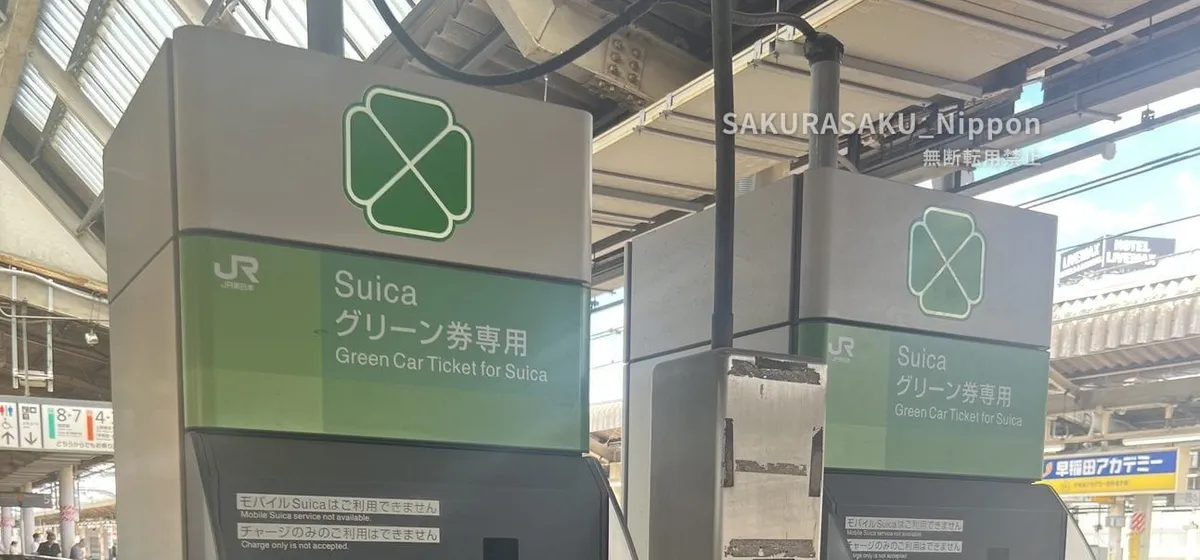
At stations where Green Cars stop, the platform has green machines marked “Suica グリーン券専用 / Green Car Ticket for Suica”, with the four-leaf clover on top.
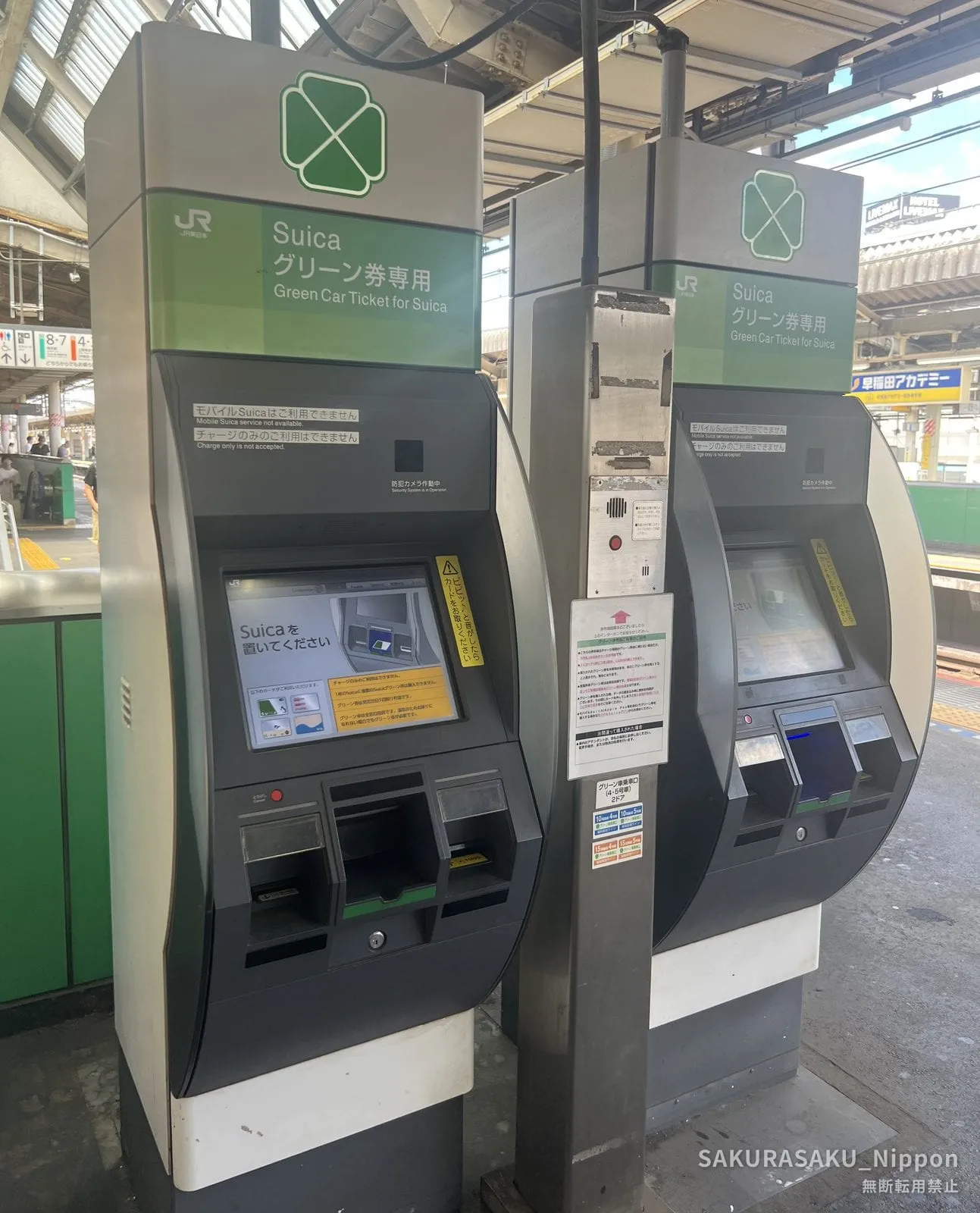
These machines work with a physical card: Suica, PASMO, Kitaca or TOICA, including the Suica cards issued by Tokyo Monorail and the Rinkai Line. Other IC cards, such as ICOCA from western Japan, cannot be used for a Suica Green Car ticket (JR East, Green Cars on Local Trains).
Place your card as the screen asks and buy the ticket for your trip. The charge comes out of the balance on the card. The screen we used could be switched to English, 简体中文, 繁體中文 and 한국어.
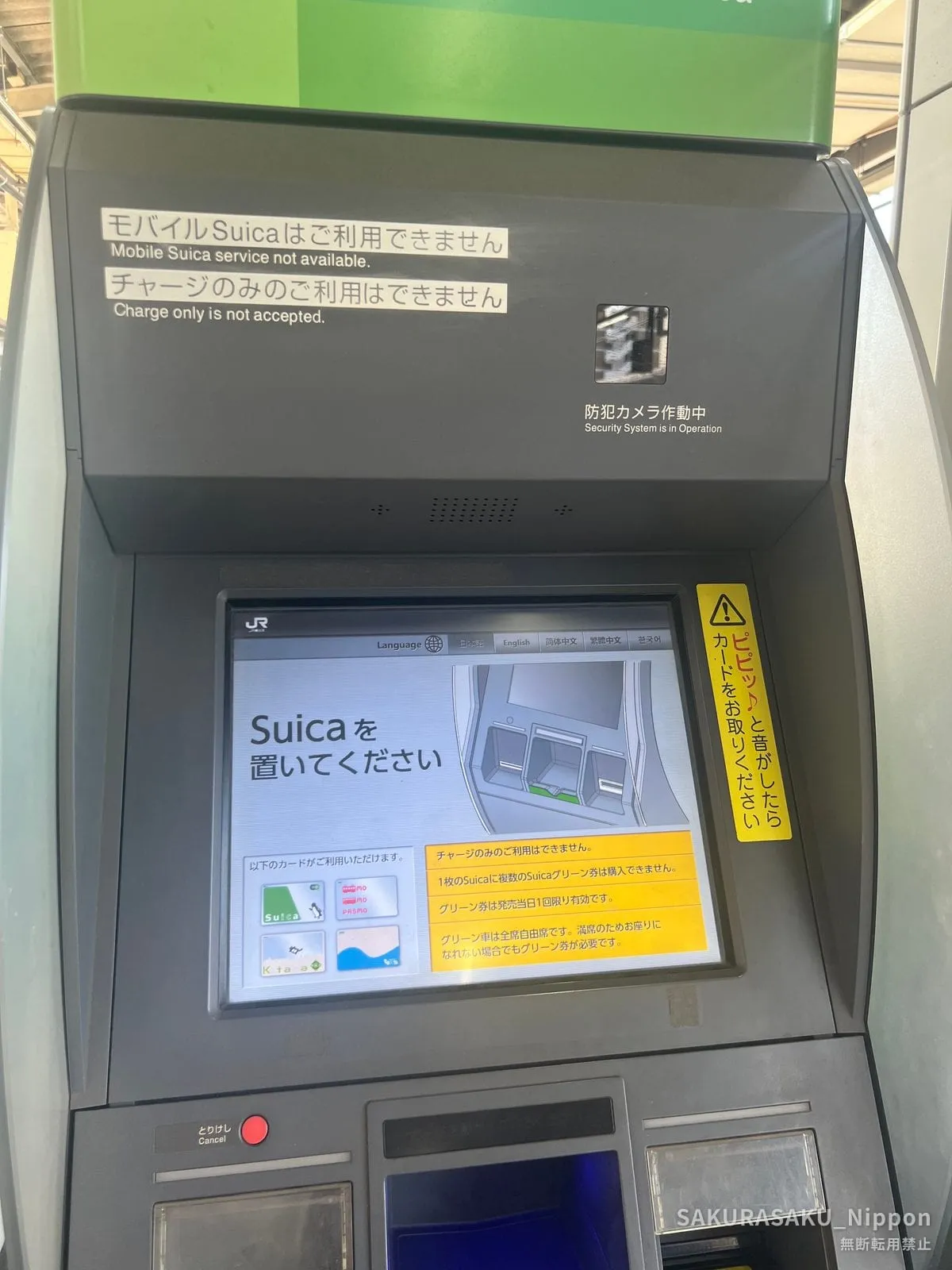
Please read the notices on the machine before you start.
The machine does not take Mobile Suica. The Suica on your phone will not work here. If you use a phone, buy in the app instead (see the next section).
You cannot pay in cash. If your balance is short, some machines inside the gates let you add just the missing amount with one or two ¥1,000 notes (JR East, how to use Suica Green Car tickets (Japanese)).
One card holds one Green Car ticket. You cannot buy two people’s tickets on one card, and if you buy another, the first one is overwritten and becomes invalid. A family needs one IC card per person.
2. In the Welcome Suica Mobile app
Since March 1, 2026, visitors using the Welcome Suica Mobile app can buy a Suica Green Car ticket inside the app (JR East, Welcome Suica Mobile update (Japanese)). You pay with Apple Pay. The Suica balance in the app cannot be used for it, and each device can hold a ticket for one person only.
Here is how to buy it in the app (JR East, Welcome Suica Mobile, buying a Suica Green Car ticket (Japanese)).
- Open the app and, on the Home tab, tap “Buy a Ticket” in the Green Car ticket section
- In the Suica Green Car Ticket menu, tap “Buy a Ticket”
- Choose your departure and arrival stations and tap “Next”
- Check the section, the date and the price, then pay
Finish buying before you board. If the attendant checks tickets before you are done, you pay the on-board price.
There is one exception. For trips from stations on the Tokyo side of Yugawara to Kannami, Mishima or Numazu on the Tokaido Line, the ticket cannot be bought in the app. For that trip, use a physical IC card or a paper ticket.
If you already use the Japanese Mobile Suica app, you can also buy the ticket there (JR East, how to use Suica Green Car tickets (Japanese)).
3. A paper Green Car ticket
Without a suitable card or app, you can buy a paper Green Car ticket from a ticket machine outside the gates or at the ticket office (Midori-no-Madoguchi) of a major station (JR East, Green Cars on Local Trains). It costs ¥260 more than with Suica.
One time I had already gone through the gates, so I told the staff at the staffed gate that I wanted to buy a Green Car ticket, stepped out, bought one at a machine outside and came back in the same way. I was not charged anything extra. That is simply what happened to me. Please follow the station staff’s instructions.
With a paper ticket, the reader above the seat is of no use to you. An attendant will come to check tickets, so show it when asked.
When you sit down, touch the ceiling
This is the part that surprises people. With a Suica ticket there is no gate to pass. The ticket is stored on your card or in your app.
- Sit in an empty seat
- Touch your card or phone to the reader directly above your seat
- The lamp changes from red to green
Red means the seat is free. Green means the person sitting there has paid, and the attendant does not need to check your ticket (JR East, Green Cars on Local Trains). With an iPhone, touch the top end of the phone, the camera side, to the reader (JR East, how to use Suica Green Car tickets (Japanese)).
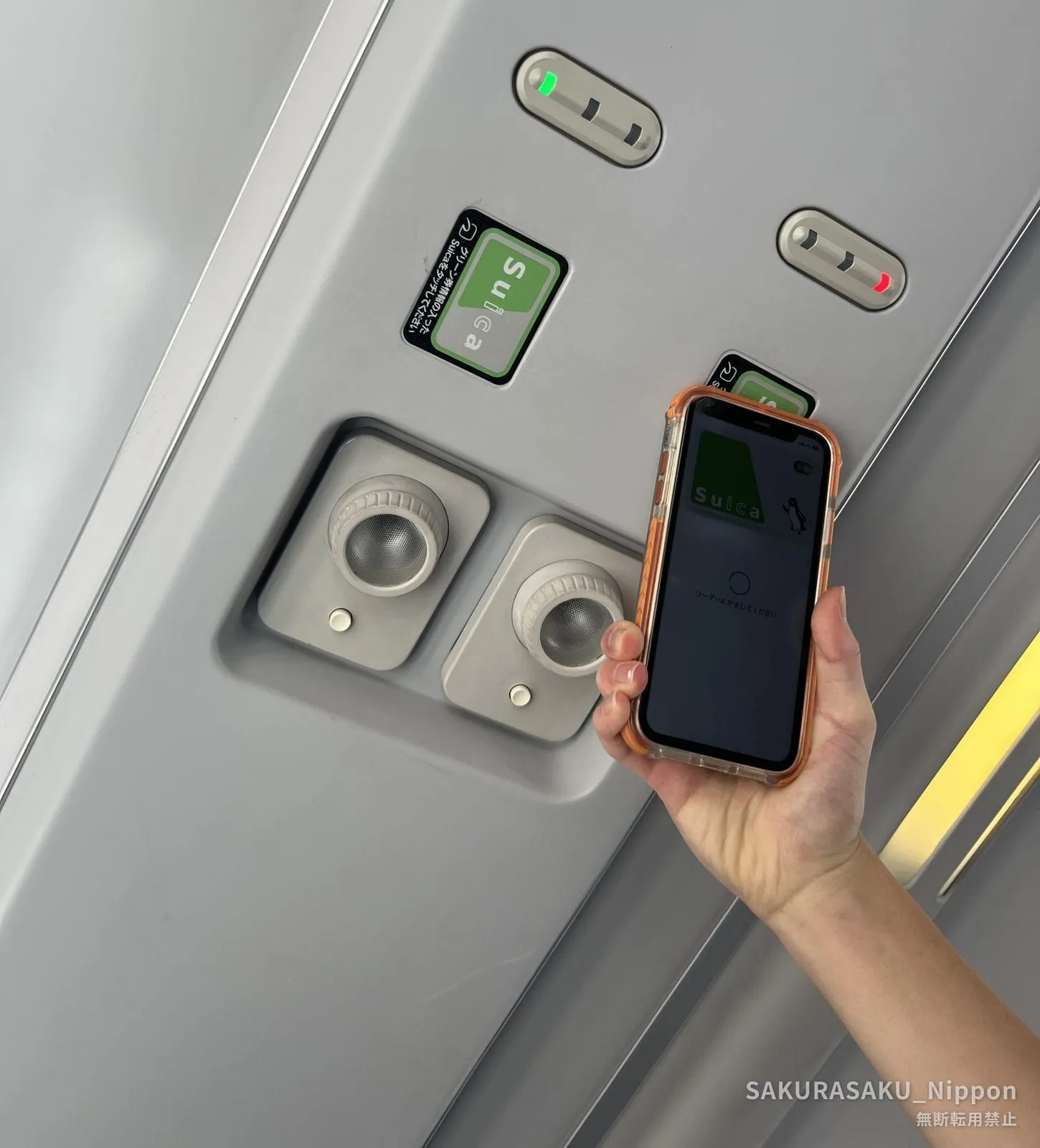
Moved to another seat?
Touch the reader again at your new seat. If you change trains on the way, touch before you get off and again after you board the next train. You can only change to a train going in the same direction, without leaving the gates (JR East, Green Cars on Local Trains).
Upstairs or downstairs?
The Green Car has two floors, and the seats face forward. The upper floor gives a wide view. The lower floor sits close to the ground, with your eyes almost level with the platform. It is a strange and rather fun view.
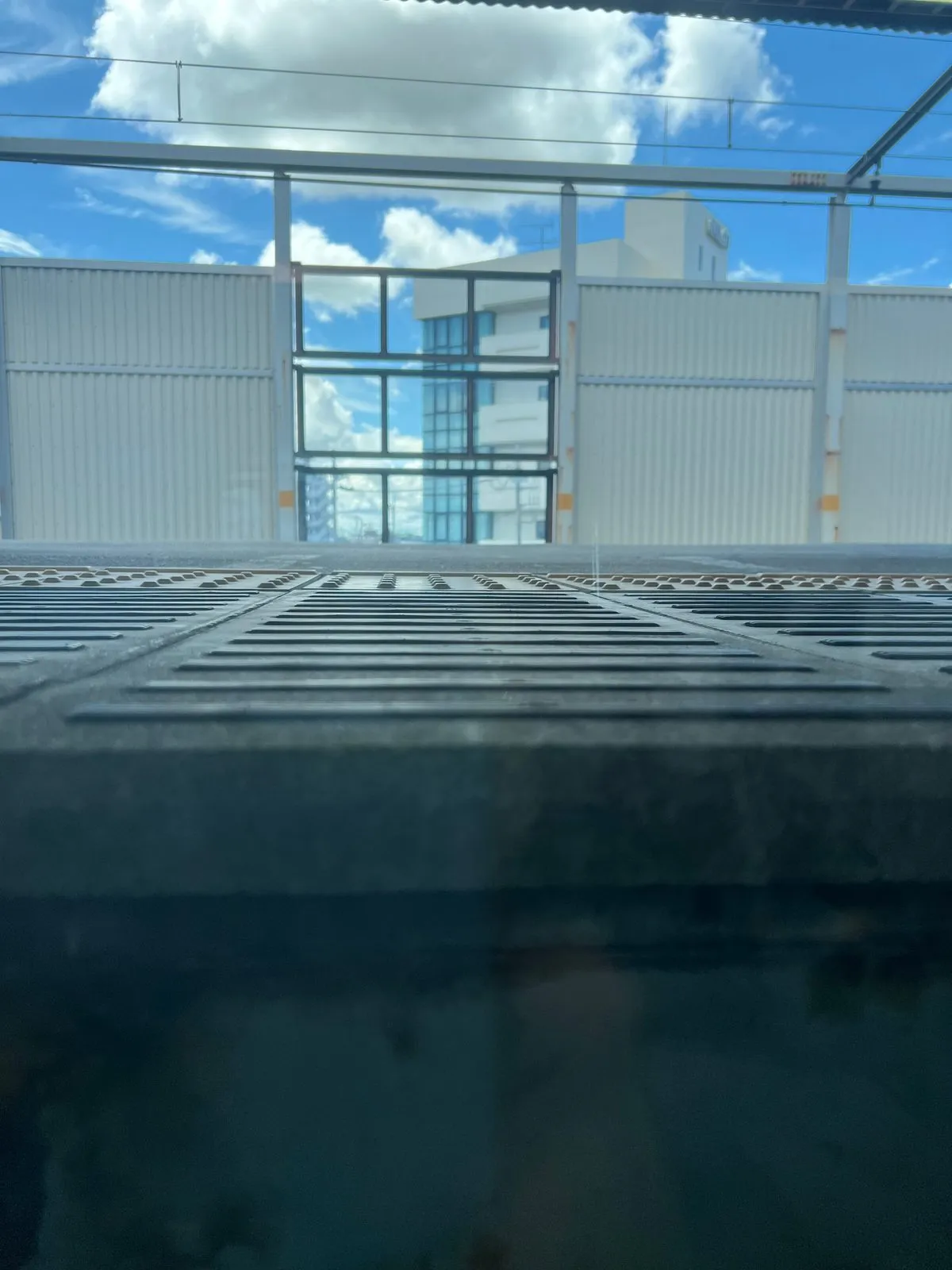
Taken from a lower-floor seat. The platform floor is right at eye level.
Before you ride
If the car is full, you stand
Because no seat is reserved, the Green Car can be full. You still need a Green Car ticket if you stand in the aisle or on the deck. If you would rather move to an ordinary car, tell the Green Attendant on board (JR East, Green Cars on Local Trains).
On holiday evenings and Friday nights, you may have to stand even in the Green Car. Boarding at the first station of the line, or traveling a little earlier or later, helps.
No space for large luggage
There is no dedicated space for oversized luggage in the Green Car (JR East, Green Cars on Local Trains). With a large suitcase, choose a quieter time. You could also send it ahead to your hotel by a luggage delivery service, or leave it in a station coin locker on a day trip. Some hotels will keep your bags before check-in and after check-out, so it is worth asking.
Refunds on the same day only
If you do not use your ticket, you can get a refund on the same day at a ticket office at a JR East station in the Tokyo area. The fee is ¥220, and refunds are not given on board. Tickets bought in an app are refunded in the app (JR East, notes on Suica Green Car tickets (Japanese)).
Which lines have Green Cars?
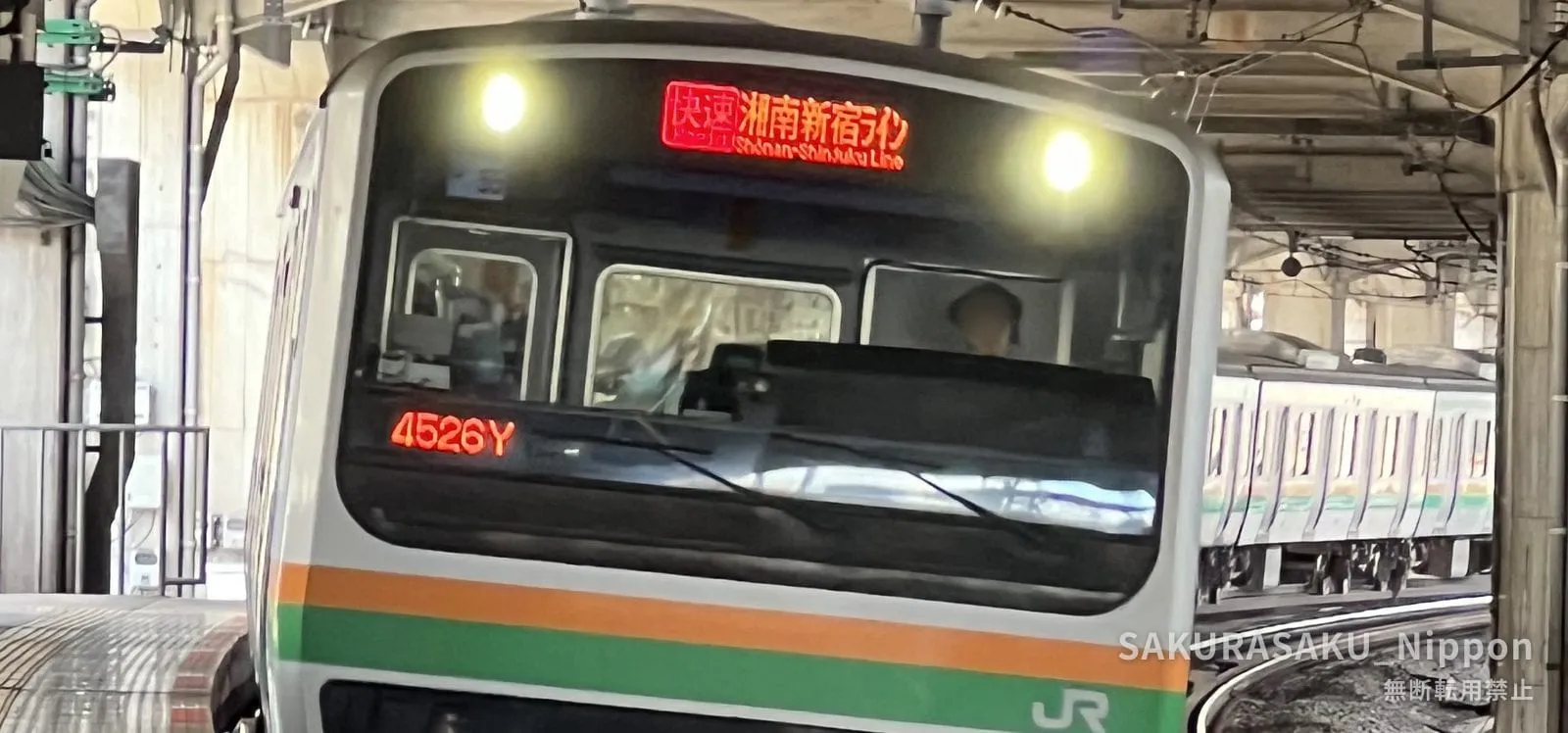
You will find them on the local and rapid trains of the Tokaido, Yokosuka, Chuo Line Rapid, Ome, Takasaki, Utsunomiya, Joban and Sobu Line Rapid lines, and on the Shonan-Shinjuku Line and Ueno-Tokyo Line (JR East, Green Cars (Japanese)). Green Car service on the Chuo Line Rapid and the Ome Line started on March 15, 2025 (JR East, March 2025 timetable revision (Japanese)). Some trains on these lines run without Green Cars.
Is it worth it?
It is worth paying for on journeys of an hour or more, when you have a lot of luggage, when the ordinary cars are crowded, and on long trips to places such as Utsunomiya, Takasaki or Odawara.
From Tokyo to Utsunomiya, for example, is 109.5 km. The ordinary fare of ¥2,090 plus a ¥1,550 Green Car ticket comes to ¥3,640, and you sit down the whole way. I worked out the fare using JR East’s fare rules (JR East, passenger regulations, Article 77-3 (Japanese)). For what to do when you get there, see our Utsunomiya day trip.
For a twenty-minute ride, or in the middle of a weekday when the ordinary cars are quiet, you may not need it. But if riding a double-decker is part of the fun for you, any time is a good time.
Practical information
- Checked on October 19, 2026
- Lines Local and rapid trains on the Tokaido, Yokosuka, Chuo Line Rapid, Ome, Takasaki, Utsunomiya, Joban and Sobu Line Rapid lines, the Shonan-Shinjuku Line and the Ueno-Tokyo Line (some trains have no Green Cars)
- Charge (on top of the fare) With Suica, up to 50 km ¥750, up to 100 km ¥1,000, 101 km and over ¥1,550. Paper ticket ¥1,010, ¥1,260 and ¥1,810
- Seats All unreserved. A ticket is needed even if you stand
- Valid for One trip on the day of purchase
- Where to buy Green machines on the platform (Suica, PASMO, Kitaca and TOICA cards), the Welcome Suica Mobile app (Apple Pay), the Mobile Suica app, or a paper ticket outside the gates
- After boarding Touch the reader above your seat (red to green). Show a paper ticket to the attendant
- Refunds Same day, at a JR East ticket office in the Tokyo area (¥220 fee), or in the app
- Official pages JR East, Green Cars on Local Trains, JR East, Green Car fares, JR East, Green Cars, JR East, how to use Suica Green Car tickets, JR East, notes on Suica Green Car tickets, JR East, Welcome Suica Mobile update, JR East, Welcome Suica Mobile, buying a Suica Green Car ticket, JR East, new Green Car fares for the Tokyo area, JR East, March 2025 timetable revision, JR East, reserved and unreserved seats on the shinkansen, JR East, passenger regulations, Article 77-3 (all but the first two pages are in Japanese)
What goes past the window
From an upper-floor seat, sitting that much higher, you notice the freight trains. On the Tokaido and Utsunomiya lines alike, long trains loaded with square containers slide past on the next track.
Those square boxes have model numbers. And somebody makes a storage box in the shape of one.

JR Freight container storage box (19D pattern, with lid)
View the JR Freight container storage box on Amazon.jp
View the JR Freight container storage box on Rakuten (Japanese site)
Price and stock may change. Other patterns, including the 18D, are sold on the same page
Who is this for?
Travelers who want the ride itself to be part of the trip. Japanese railways do not compete on speed alone. Coupling a double-decker first-class car to an ordinary commuter train is a good example of that.
And anyone riding for an hour or more with a large suitcase. This is where the Green Car charge is most worth paying.
Note: Fares and the lines served can change. Please check JR East’s official information before you travel.
Affiliate note: This article contains Amazon and Rakuten affiliate links. As an Amazon Associate, we earn from qualifying purchases at no extra cost to you.